
Creating a Safer Home for Seniors with Poor Vision: Fall Prevention Starts Here
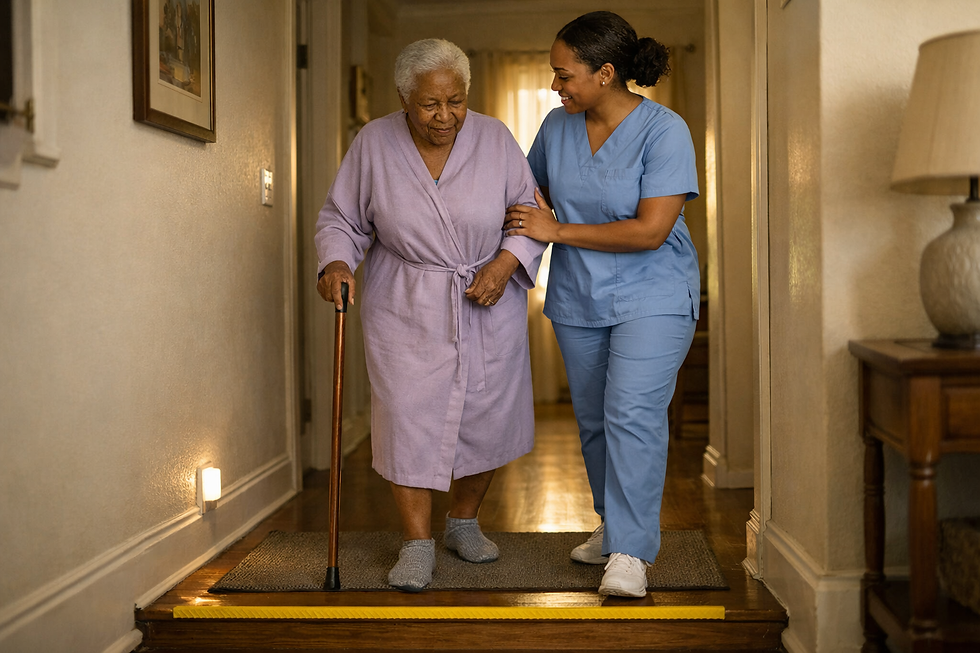
Every year, one in four older adults experiences a fall. And for seniors with poor vision, that number climbs even higher. It is not because they are careless. It is because the home they have lived in for decades suddenly holds hazards they can no longer clearly see. A rug corner. A step down. A cord stretched across a dim hallway. These are the things that change everything in a single second.
Fall prevention for seniors with poor vision is not a checklist you hang on the refrigerator and forget. It is an ongoing commitment to making the home a genuinely safe place to live, move, and thrive. And it starts with understanding just how deeply vision loss changes the way a person experiences their own space.
Why Poor Vision Makes Fall Prevention for Seniors So Much More Urgent
Most of us take for granted the way our eyes help us judge distance, detect contrast, and spot obstacles before we reach them. For seniors dealing with conditions like macular degeneration, glaucoma, cataracts, or diabetic retinopathy, that ability is diminished in ways that are not always obvious to the people around them.
They may look like they can see just fine. But depth perception is off. Low-light areas become nearly impossible to navigate. The edge of a step and the floor below it look like one flat surface. This is exactly why fall prevention for seniors with poor vision demands a different kind of attention than general senior safety. The risks are more specific, and so the solutions need to be too.
Room-by-Room Guide to Fall Prevention for Seniors with Poor Vision
Making the Bathroom a Safer Space
The bathroom is where most household falls happen, and it becomes especially dangerous when vision is compromised. Slippery floors, low toilet seats, and the disorientation that comes with waking up in the middle of the night all create real risk.
Start with bright, consistent lighting. Motion-sensor nightlights that activate automatically are one of the most effective tools for fall prevention for seniors with poor vision, because they eliminate the moment of darkness between getting up and reaching the light switch. Add grab bars beside the toilet and inside the shower or tub. Use high-contrast bath mats in colors that stand out sharply from the floor. Color contrast is not just decorative here; it is functional.
The Living Room and Hallways
These spaces tend to accumulate clutter over time. Furniture shifts. Rugs curl. Cords from lamps and chargers drift into walking paths. For someone with reduced vision, these are invisible dangers.
Walk through the space at eye level and think about what a person struggling to see would encounter. Secure all rugs with non-slip backing or remove them entirely. Keep furniture arrangement consistent so your loved one can move through the space from memory. Fall prevention for seniors with poor vision works best when the environment stays predictable.
Install bright overhead lighting and consider adding tape or colored edging to mark steps, thresholds, and any sudden changes in floor level. These simple additions cost very little but make an enormous difference.
The Kitchen
The kitchen involves hot surfaces, sharp objects, and constant movement, which makes it one of the higher-risk areas for seniors with vision challenges. Good task lighting directly over countertops can help significantly. Use contrasting colors on cutting boards, dish towels, and counter mats so your loved one can distinguish items at a glance. Keep frequently used items at a consistent, reachable height to reduce unnecessary reaching or bending.
Spills are a major fall risk in the kitchen. A caregiver or family member checking in regularly can help catch hazards before they lead to an accident.
Technology and Tools That Support Fall Prevention for Seniors with Poor Vision
There is a growing range of products designed specifically with low-vision seniors in mind. Motion-activated lighting throughout the home removes the reliance on switches that a person with poor vision may struggle to locate. Stair treads with high-visibility edges and tactile strips give physical cues that compensate for what the eyes cannot do.
Personal emergency response systems, commonly called medical alert devices, are worth every penny. If a fall does happen, the ability to call for help immediately can be the difference between a minor incident and a life-threatening situation.
The Role of Professional Home Care in Fall Prevention for Seniors with Poor Vision
No amount of grab bars and nightlights replaces the presence of a caring, attentive person. A trained caregiver brings an extra set of eyes to the home every single day. They notice when a rug has shifted. They spot the wet floor before their client does. They walk alongside their client instead of rushing ahead.
At Georgia Real Care, our caregivers are not just there to assist with daily tasks. They are there to protect the safety and independence of every senior we serve across Georgia. We understand that fall prevention for seniors with poor vision is personal. It is about preserving dignity, maintaining independence, and allowing your loved one to stay in the home they love without fear.
If someone you love is dealing with vision challenges and you are worried about their safety at home, we would love to talk with you. Reach out to Georgia Real Care today for a free consultation and let us help you build a care plan that puts safety first, every single day.


Comments