
Preventing Falls Starts with Better Balance Exercises for Seniors That Really Make a Difference

A single fall can change everything. One moment your loved one is steady on their feet, and the next, a hip fracture or a hospital stay turns their world upside down. The good news? Most falls are not random accidents. They are often the result of weakening balance, and that is something families can actually do something about. This is where balance exercises for seniors come in, not as a vague wellness trend, but as a practical, proven way to help older adults stay steady, confident, and independent in the home they love.
At Georgia Real Care, we see firsthand how fear of falling can shrink a senior's world. They stop walking to the mailbox. They avoid the stairs. They sit more and move less, which, ironically, makes the next fall even more likely. Breaking that cycle starts with understanding why balance fades and how the right movements can bring it back.
Why Balance Naturally Declines With Age
Balance is not one single skill. It is the brain, the inner ear, the eyes, and the muscles all working together in a split second to keep a person upright. As we age, each of these systems can slow down a little. Muscle mass decreases, reaction time lengthens, and vision or inner ear changes can throw off spatial awareness. Add in medications, joint pain, or a sedentary lifestyle, and the risk multiplies quickly.
This is exactly why balance exercises for seniors are not optional extras. They directly train the systems that keep older adults upright, helping the body relearn how to react quickly when a foot catches the edge of a rug or a curb appears unexpectedly.
Simple Balance Exercises to Prevent Falls for Seniors That Actually Work
You do not need a gym membership or expensive equipment to build better stability. Many of the most effective routines can be done right at home, near a sturdy chair or countertop for support.
Heel to Toe Walk
Walking in a straight line, placing the heel of one foot directly in front of the toes of the other, challenges the body to stay centered. It mimics real life movements like navigating a narrow hallway, making it one of the most practical exercises a senior can practice daily.
Single Leg Stance
Standing on one leg for a few seconds, holding onto a counter if needed, trains the small stabilizing muscles around the ankle and hip. Over time, the goal is to hold the position a little longer or eventually let go of the support entirely.
Sit to Stand Repetitions
Rising from a chair without using the hands builds leg strength, which is closely tied to balance. This movement also reflects something seniors do dozens of times a day, so improving it has an immediate impact on everyday confidence.
Weight Shifts
Slowly shifting body weight from one foot to the other, side to side and then front to back, teaches the body to control small movements before they turn into a stumble. It is gentle, low impact, and ideal for those just beginning a balance routine.
Tai Chi Inspired Movements
Slow, flowing movements borrowed from tai chi have been widely studied for their ability to improve coordination and reduce fall risk. The controlled, deliberate pace makes it approachable even for seniors with limited mobility.
Making Balance Exercises a Safe, Sustainable Habit
Consistency matters more than intensity. A few minutes of balance exercises for seniors, done several times a week, will do far more good than one exhausting session followed by weeks of inactivity. The key is starting slow, always having something sturdy nearby, and listening to the body rather than pushing through discomfort.
It also helps to remove the guesswork. Wearing supportive, non-slip shoes, clearing walkways of clutter, and ensuring good lighting throughout the home all work hand in hand with physical exercise to reduce fall risk. Balance training is powerful, but it works best as part of a complete approach to home safety.
Why Professional Support Makes a Real Difference
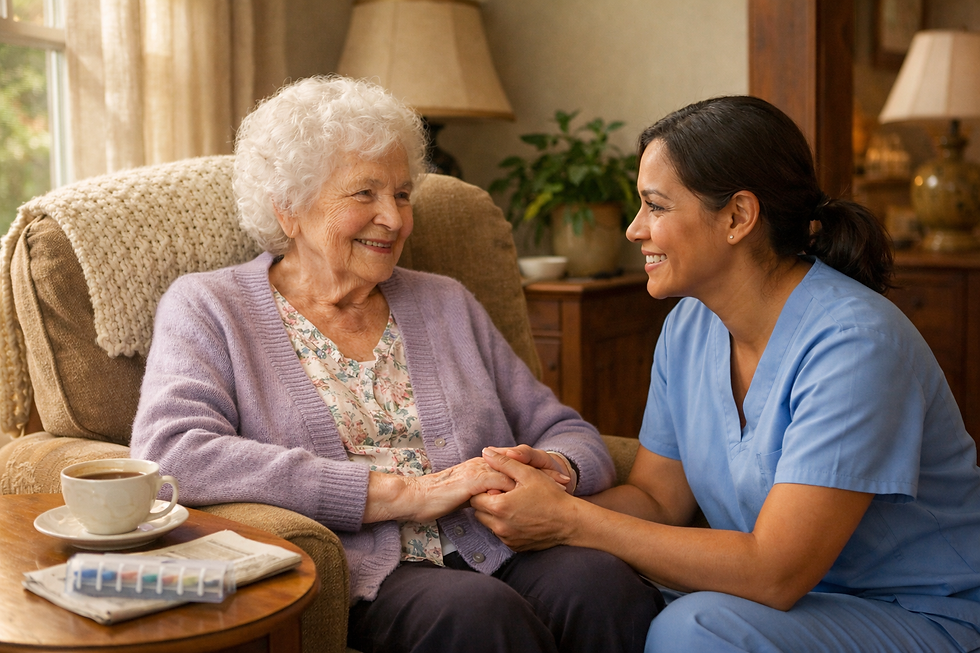
Some seniors feel nervous trying new movements alone, and honestly, that hesitation is understandable. A caregiver standing nearby, offering steady encouragement and a watchful eye, changes the entire experience. Instead of fear, there is reassurance. Instead of guessing whether a movement is being done correctly, there is guidance every step of the way.
This is exactly the kind of support our caregivers provide every day. Whether it is helping a client practice their balance exercises for seniors routine, accompanying them on a walk, or simply being present so they feel safe trying something new, that extra layer of companionship often makes the difference between a senior who avoids movement out of fear and one who embraces it with confidence.
A Stronger, Steadier Tomorrow Starts Today
Falls do not have to be an inevitable part of growing older. With the right balance exercises for seniors, consistent practice, and a little support along the way, families can help their loved ones move through life with more confidence and far less worry. It is never too late to start building a stronger foundation, one small step at a time.
If you would like a caring, trained professional by your loved one's side as they work toward better balance and a safer home, Georgia Real Care is here to help. Reach out to us today, and let's build a personalized care plan that keeps your family member steady, supported, and truly at home.


Comments